Why New Plants Die in Their First Summer
Planting depth, circling roots, the amended-pocket trap, a root ball that never got wet, and how to tell overwatering from drought before it is too late.
· 11 min read
Water, usually. And more often too much than too little, which is the part nobody expects. After water, the most common cause is planting depth — specifically, a root flare buried a few inches below grade in a hole that was dug deeper than it needed to be.
Almost every first-summer loss we get asked about traces back to one of five things: it was planted too deep, its roots were left circling, it went into an amended pocket in clay, its root ball never actually got wet, or it was watered on a schedule that kept the soil saturated. All five happen at planting or in the first month, which means they are all preventable and none of them are fixable in August.
Planting depth, and the flare nobody looks for
Find where the trunk stops being a cylinder and flares out into the top of the root system. That flare belongs at finished grade or very slightly above it. Not level with the top of the container soil — level with the flare.
Those two things are frequently not the same. Nursery containers get topped up during growing, so the flare can sit several inches below the surface of the soil in the pot. Plant it "at the same depth it was in the pot" and you have already buried it. The only way to know is to scrape the top of the root ball back with your fingers before setting it and find the flare yourself. On a tree it is worth doing carefully; on a fifteen-gallon specimen you can be removing two or three inches of media before you get there.
Why depth kills:
- Bark buried in moist soil rots. Trunk tissue is not root tissue and it is not built to sit wet.
- Roots near the surface need oxygen. Bury the root system deeper than it grew and the fine roots at the top of the ball suffocate.
- Buried flares grow girdling roots. Roots that would have run outward instead circle the buried trunk, thicken over years, and slowly strangle it. This is the mechanism behind trees that die at year eight for no visible reason. They were killed at year one.
Dig wide, not deep
The hole wants to be two to three times the width of the root ball and no deeper than the root ball is tall.
Width is where new roots go. Loosening a wide, shallow area gives roots an easy path outward into native soil, which is where they need to end up.
Depth is where the trouble is. Dig deeper than the ball and you have to backfill under it, and loose backfill settles under the weight of the plant and the first few waterings. A plant set perfectly at grade on loose fill is a plant that is two inches too deep a month later, and there is no way to raise it without starting again. The bottom of the root ball sits on undisturbed soil. Always.
Circling roots
A plant that has been in its container a while has roots running around the inside of the pot in a spiral, because that is the only direction available to them. Put that root ball in the ground intact and many of those roots keep going in the same circle. They do not spontaneously decide to head outward.
The consequences show up over a few years: the plant never anchors properly, it rocks in wind, rocking shears off the fine feeder roots that were forming, and on a tree the circling roots eventually girdle the trunk.
The remedy feels destructive and is not. Slice the outside of the root ball vertically in three or four places, an inch deep, top to bottom. On a badly pot-bound plant, shave the outer inch off entirely, or butterfly the bottom half open. Cut roots branch. Uncut circling roots keep circling.
Anything with a dense mat of roots at the bottom of the pot gets that mat cut off rather than folded into the hole.
The amended pocket, and why we backfill with native soil
This one is counterintuitive, because it feels generous.
Dig a hole in clay, fill it with bagged potting mix and compost, and you have built the plant a pot with no bottom. Two things go wrong.
The roots stay in the nice part. Given a choice between rich loose media and dense native clay, roots stay where it is easy. They fill the amended pocket, circle inside it, and never establish into the surrounding soil — which means the plant is permanently dependent on a small volume of soil for water and anchorage.
Water perches in it. Water moves between soils of different texture reluctantly. A pocket of coarse, light media surrounded by clay does not drain into the clay at anything like the rate it drains through itself. It fills, and it stays filled. The plant sits in a bathtub, and the owner sees a well-drained mix and concludes it cannot be drowning.
So the hole gets backfilled with the native soil that came out of it, broken up. Amendment goes on the surface, as mulch, where it feeds the soil from the top down the way it does in every landscape that was not built by people. The roots then face the same soil at the edge of the ball as they will three feet out, and they grow into it.
Check that the hole drains before anything goes in it
On clay, this takes ten minutes and saves plants.
Dig the hole. Fill it with water and let it drain completely. Fill it again, and time it. If water is still standing several hours after the second fill, that hole does not drain, and anything planted in it will spend its life in saturated soil.
The options are all real, and one of them is unwelcome:
- Plant high. Set the root ball with its top third above grade and mound native soil up around it, so a meaningful share of the root system is above the waterlogged zone.
- Change the plant list. Plenty of things tolerate heavy wet soil. Most of the popular Mediterranean and native plants do not, and a plant that wants sharp drainage will not be talked into clay.
- Drain the area. Sometimes the right answer, and it is a real piece of work rather than a bag of amendment.
The unwelcome one is that on some lots the honest answer is a raised bed or a different palette. We would rather say that than plant something twice.
The root ball that never got wet
This is the killer nobody sees, and it happens on well-designed drip systems.
Container mix is bark and peat — coarse, light, and completely unlike native soil. Water does not readily cross the boundary between the two. So an emitter placed eight inches away in the backfill wets the backfill beautifully and leaves the root ball dry, and for the plant's first months that root ball is its entire root system.
The plant wilts. The owner digs a finger into damp backfill, concludes it cannot be water, and the plant dies of thirst in wet soil.
Emitters go on the root ball for the first year, and get moved or added outward as roots expand. It is the single most useful thing on this list.
There is a related failure at planting: a peat-based root ball that has been allowed to dry out hard becomes hydrophobic, and water runs around it rather than into it. If a plant arrives dry, sit the container in a tub of water until the bubbles stop before it goes in the ground.
Overwatered or underwatered? Read the soil, not the leaves
They look the same from above. Wilting, yellowing, leaf drop, stalled growth — all of it happens whether the roots have no water to take up or no functioning roots left to take it up with.
The test is a soil probe or a long screwdriver, pushed in beside the root ball, four to six inches down:
| What you find | What it means | What to do |
|---|---|---|
| Dry, plant wilting | Underwatered | Longer runs first, more frequent second |
| Wet, plant wilting | Roots drowning | Reduce frequency; check whether the spot drains at all |
| Dry root ball, wet backfill | Emitters in the wrong place | Move them onto the ball |
| Wet, several plants failing in one low corner | A drainage problem, not a schedule | Fix the grade or the drain |
The reason "wet and wilting" is so common is that it is self-reinforcing. The plant looks thirsty, so it gets more water, so more roots die, so it looks thirstier.
Establishment is longer than the label suggests
"Drought tolerant" means drought tolerant once established, and that phrase does a great deal of work that nobody reads.
As a rough guide, shrubs and perennials need real attention through their first full year, and trees need roughly a growing season per inch of trunk caliber before they are genuinely on their own. Until then, a native or Mediterranean plant in its first July needs actual water, and then — this is the part people miss — it needs you to stop as it establishes. Continuing to water an established native on a new-plant schedule is a slow way to rot it.
Planting season matters for the same reason. A plant that goes in during the cool months spends the whole mild season growing roots and meets its first summer with a working system underneath it. A plant that goes in during a heat wave is trying to grow roots in the worst conditions of the year while its leaves are losing water faster than it can take it up. Summer planting is doable and it is more work, and it is worth being told that rather than finding out.
The things that are not water
Not everything is irrigation. Worth ruling out:
- Gophers. A healthy plant that suddenly wilts and then pulls straight out of the ground with no roots left. Fast, total, and nothing to do with the schedule.
- Sun mismatch. A plant grown under nursery shade cloth and dropped into a west-facing exposure in July burns regardless of water. Acclimating it in a shadier spot for a week or two helps.
- Reflected heat. A bed against a light stucco wall or above a driveway is several degrees hotter than the same bed ten feet away, and it is not the same planting environment.
- Fertilizer on a stressed plant. Feeding heavily right after planting pushes soft top growth that the root system cannot supply, and salts in dry soil burn roots directly. Roots first, food later.
- Volcano mulching. Mulch piled against a trunk holds moisture on bark and invites rodents. Two to three inches, pulled back a few inches from the trunk or crown.
- Staking left on too long. Stakes prevent the trunk from flexing, and flexing is what builds the taper that lets a tree hold itself up. Stake only if the trunk cannot stand, tie loosely, and remove within the first year.
Spacing, which kills slowly rather than quickly
Nothing on this list looks like a first-summer problem, but it is worth saying because it starts on planting day.
A bed planted to look full on delivery day is a bed planted at roughly half the spacing the plants need. It looks wonderful for two seasons. Then the plants meet, shade each other, compete for the same water in the same soil, and start declining from the inside out — and the response is usually more water, into a bed that now has twice the root mass drawing on it.
Spacing to mature size means a new bed looks a little sparse and fills in correctly. It also means one irrigation zone can serve it honestly for its whole life, instead of being right for year one and wrong for year four.
The related version is grouping. Plants with genuinely different water needs on one valve leaves you choosing which half to disappoint. Thirsty things together, dry-tolerant things together, and the schedule can be honest with both.
What to ask before anything goes in the ground
- How are you setting the depth? You want to hear "root flare at or slightly above grade," and that they will find the flare rather than trusting the pot.
- Is the hole wider than it is deep, and does the ball sit on undisturbed soil?
- What are you backfilling with? Native soil. If the answer involves bags, ask why.
- How are you handling circling roots? Scored, shaved, or butterflied — some answer, not none.
- Have you checked that the holes drain? On clay this is not optional.
- Where do the emitters sit for the first year? On the root ball.
- What does the watering schedule look like at three months, and at a year? There should be a taper.
- Which of these plants are you least confident about in this spot? The answer tells you whether you are talking to someone who has watched plants fail.
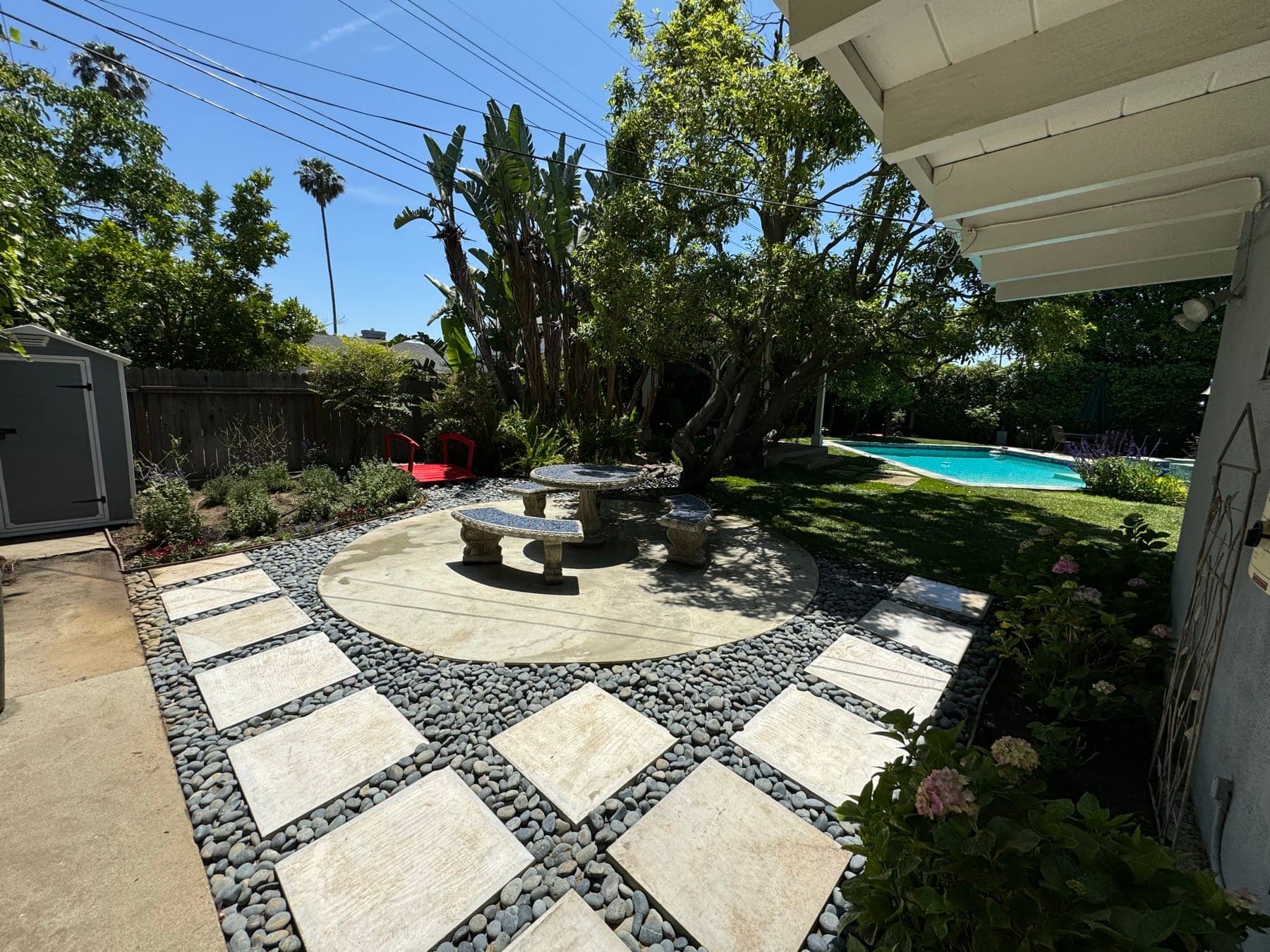
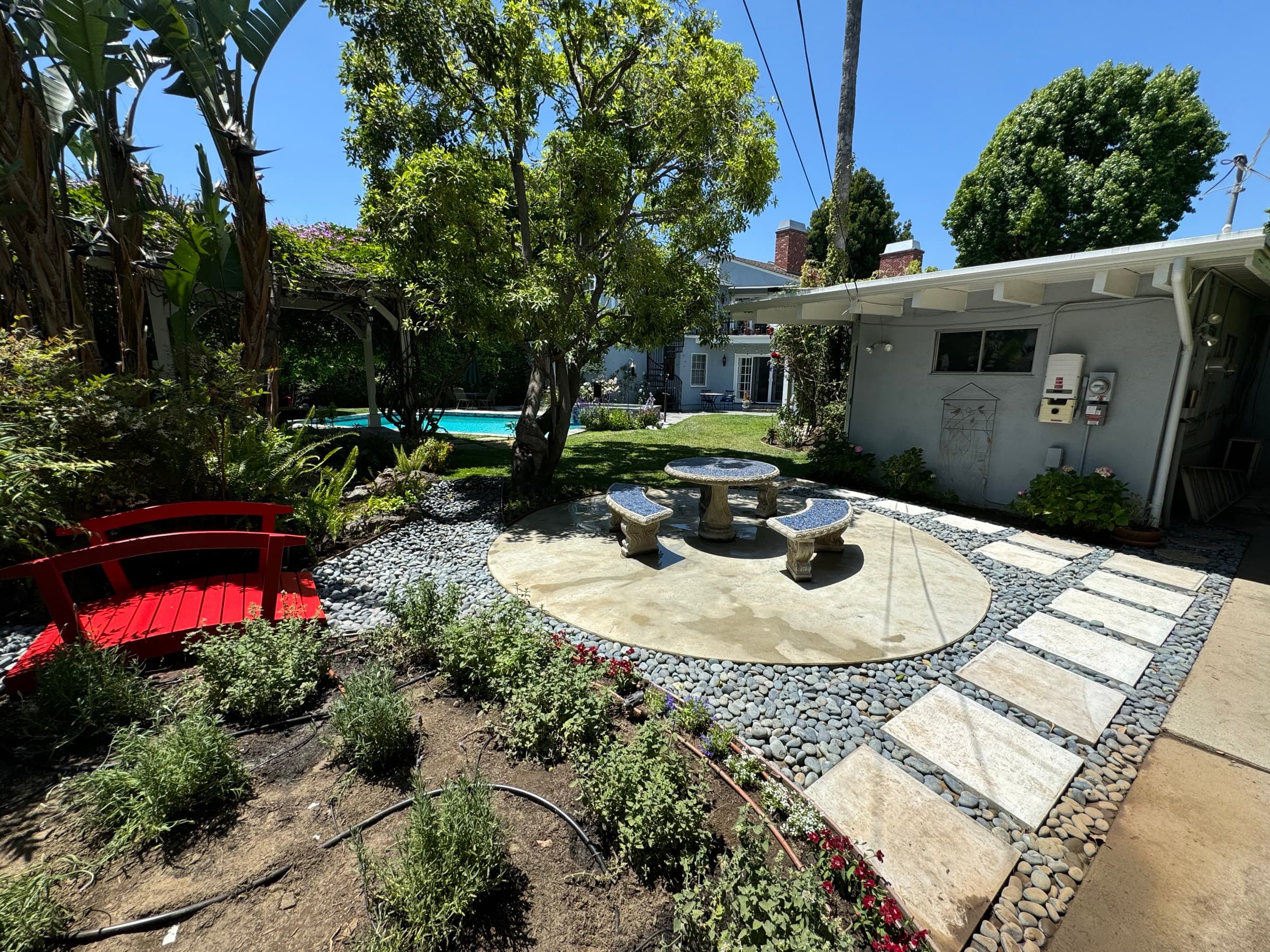
Planting laid out for how it grows in, set at the right depth, and mulched to survive its first summer.
Read next
- How Thick Should a Concrete Driveway Be?Four inches, six, or more — what actually decides driveway thickness, why the base matters more than the number, and where RV pads differ.10 min read
- Why Concrete Cracks, and Which Cracks MatterAll concrete cracks. How to tell a harmless shrinkage hairline from a crack that means the base under your slab has failed, and what to do about each.12 min read
- How Long Before You Can Drive on New Concrete?Foot traffic in about a day, vehicles in about a week. Why the 28-day figure is misunderstood, what damages young concrete, and how heat changes a cure.11 min read