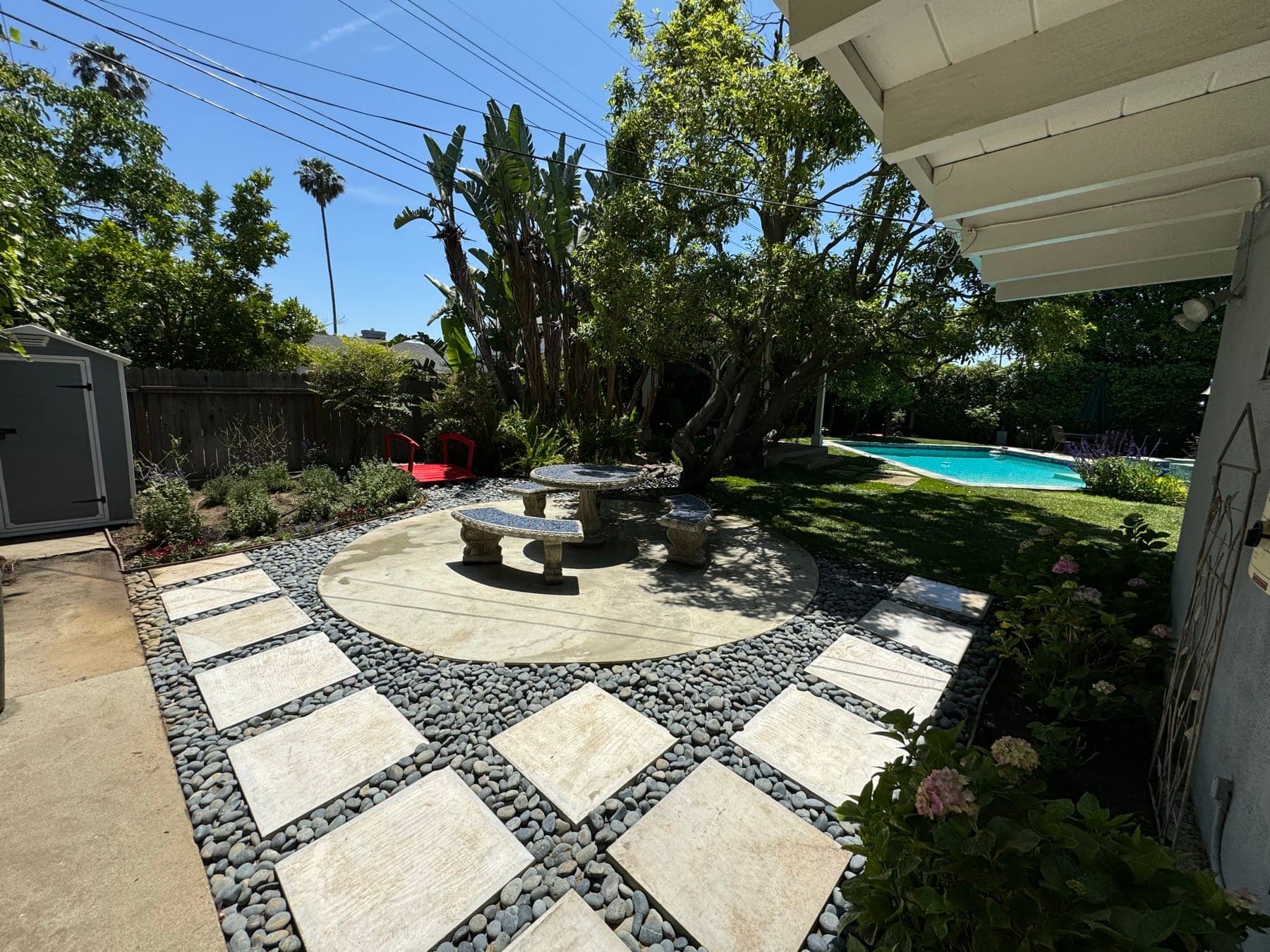
 Design inspiration
Artificial Turf Installation
Turf over a compacted, draining base, with seams you cannot pick out and edges that stay where we put them. Serving San Bernardino and Los Angeles counties.
Turf lives or dies on the base under it. We strip the old surface, excavate to the depth the use calls for, and compact the base in lifts — the same discipline as flatwork, because a base that settles gives you dips and wrinkles no amount of brushing will pull back out. The base gets shaped to drain, not simply flattened.
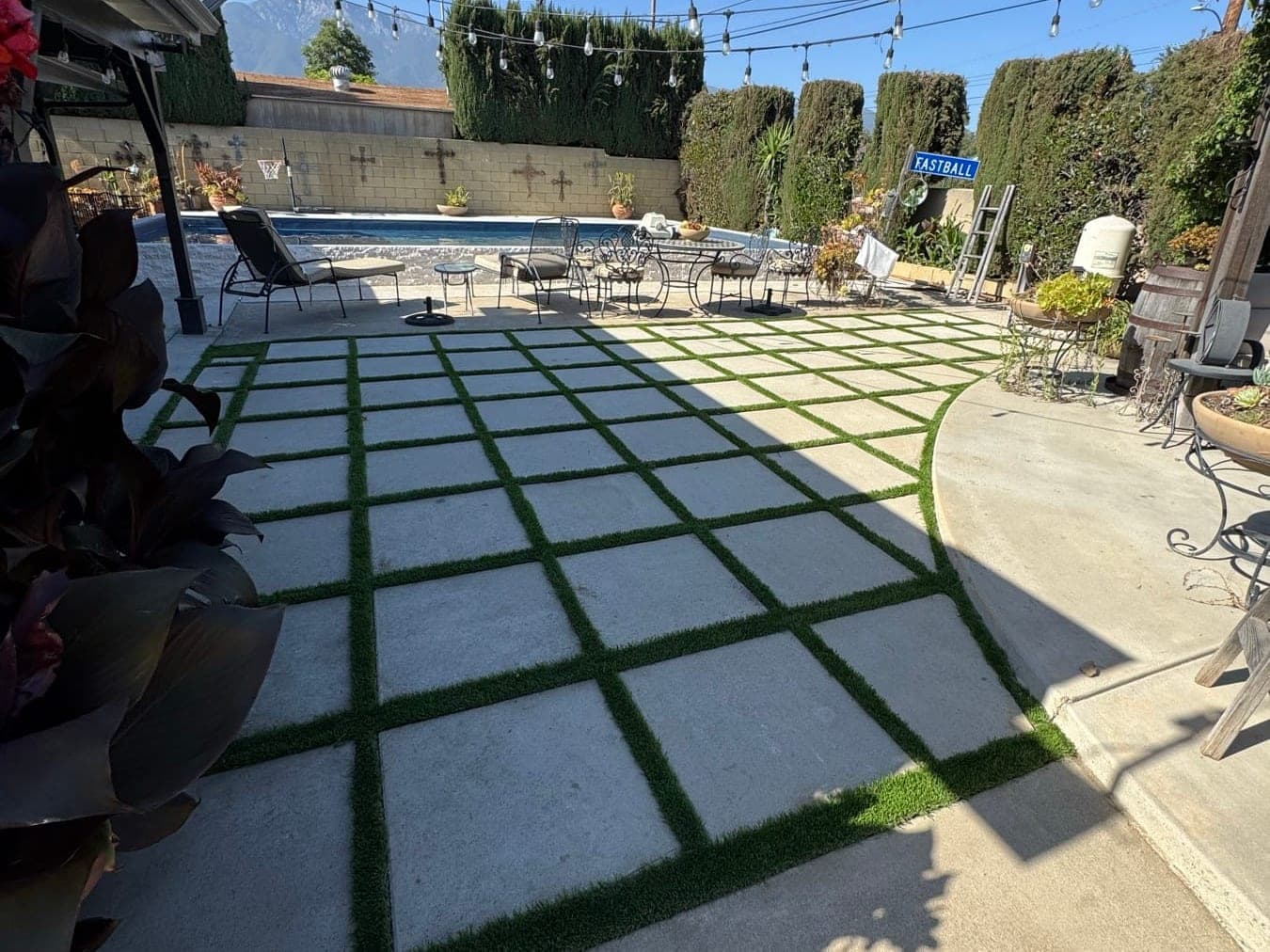
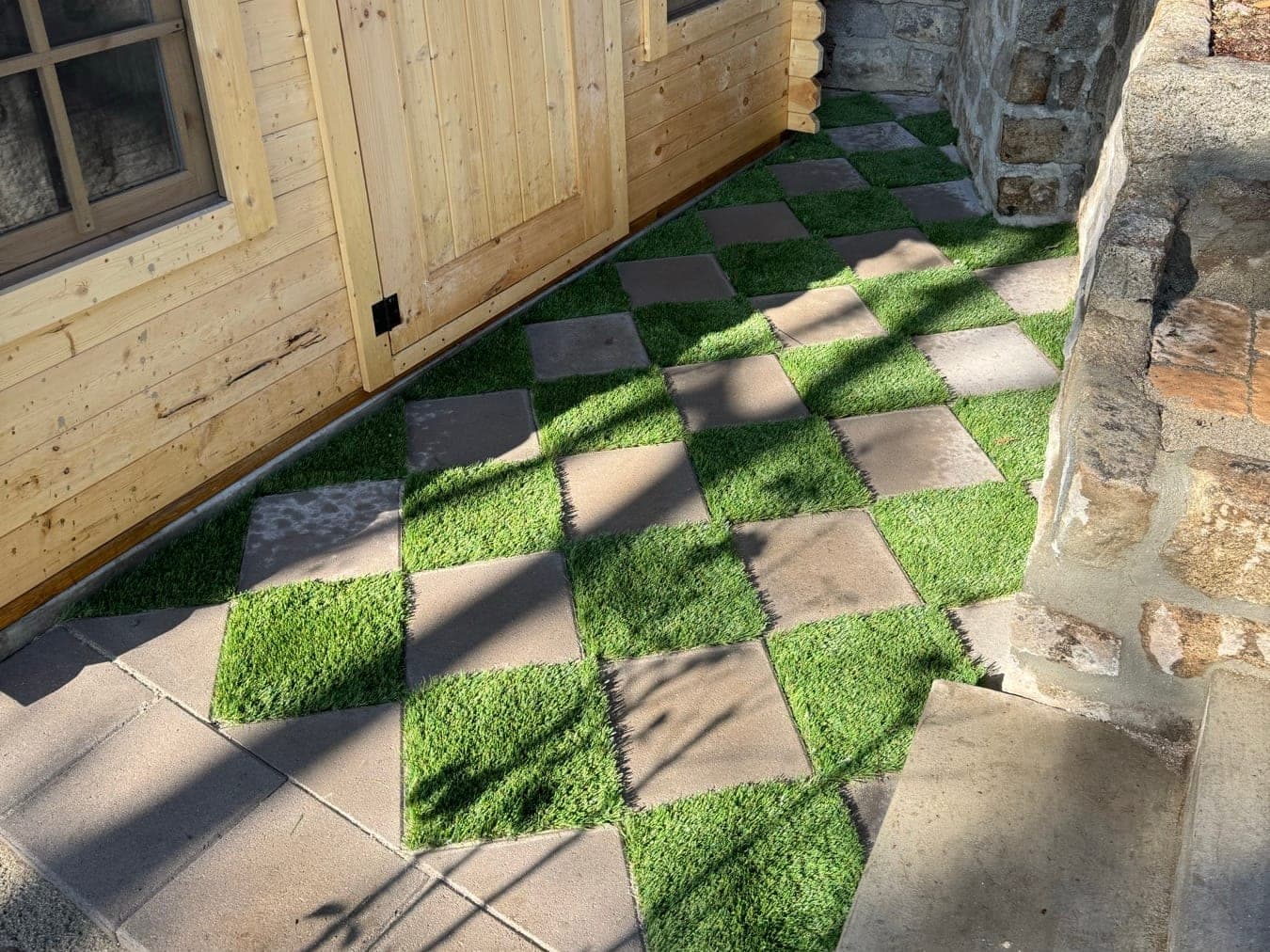
Seams are where a bad turf job announces itself. We run every roll in the same direction so the blade lean matches across the yard, trim the factory edge off, and join on seam tape so the stitch rows line up instead of leaving a visible gutter down the middle. Perimeters are nailed or bender-board edged into the base so the turf cannot creep away from the concrete over a hot summer.
Infill is the part that gets skipped. Brushed into the blades, it keeps them standing up, shields the backing from UV, and stops the surface matting down into a shine. For a dog run we build the base to drain harder and use an infill that does not hold odour. We will tell you which infill you are getting, why, and how often it wants a brush.
What’s included
- Old surface removed and hauled off
- Excavation to the base depth the use calls for, compacted in lifts
- Base shaped to drain rather than simply levelled
- Rolls run in one direction so blade lean matches across the yard
- Seams taped and joined so the stitch rows line up
- Perimeter secured into the base with nails or bender board
- Infill brushed in for blade stand-up, UV protection, and odour control
- Pet-specific base and infill build wherever there is a dog run
Common questions
Does it get hot?
Yes. Any synthetic surface in full Southern California sun runs hotter than grass, and no product claim changes that. Infill choice helps, a rinse helps, and shade helps most. If a barefoot play area in full afternoon sun is the main use, we will say so on the walk rather than after it is installed.
How long does it last?
The turf almost always outlasts the base under it. Whether you are looking at a flat yard in ten years or a rippled one comes down to how well that base was compacted and drained, which is why the money is better spent down there than on a heavier blade.
What about dogs?
It works well for dogs with the build changed for it: a more open base so urine drains straight through instead of sitting in the infill, and an infill that does not hold odour. It still needs rinsing. Turf that never gets hosed will smell, whatever it is made of.
Can you lay turf over my existing concrete?
Sometimes, if the slab is sound and drains. You would still need a pad and a way to get water off it, and you give up the option of a real base underneath. Over dirt is usually the better build. We will look at the slab and tell you which one you actually have.
Tell us about your project
Send a few details about what you want built and we will get back to you to set up a free on-site estimate.