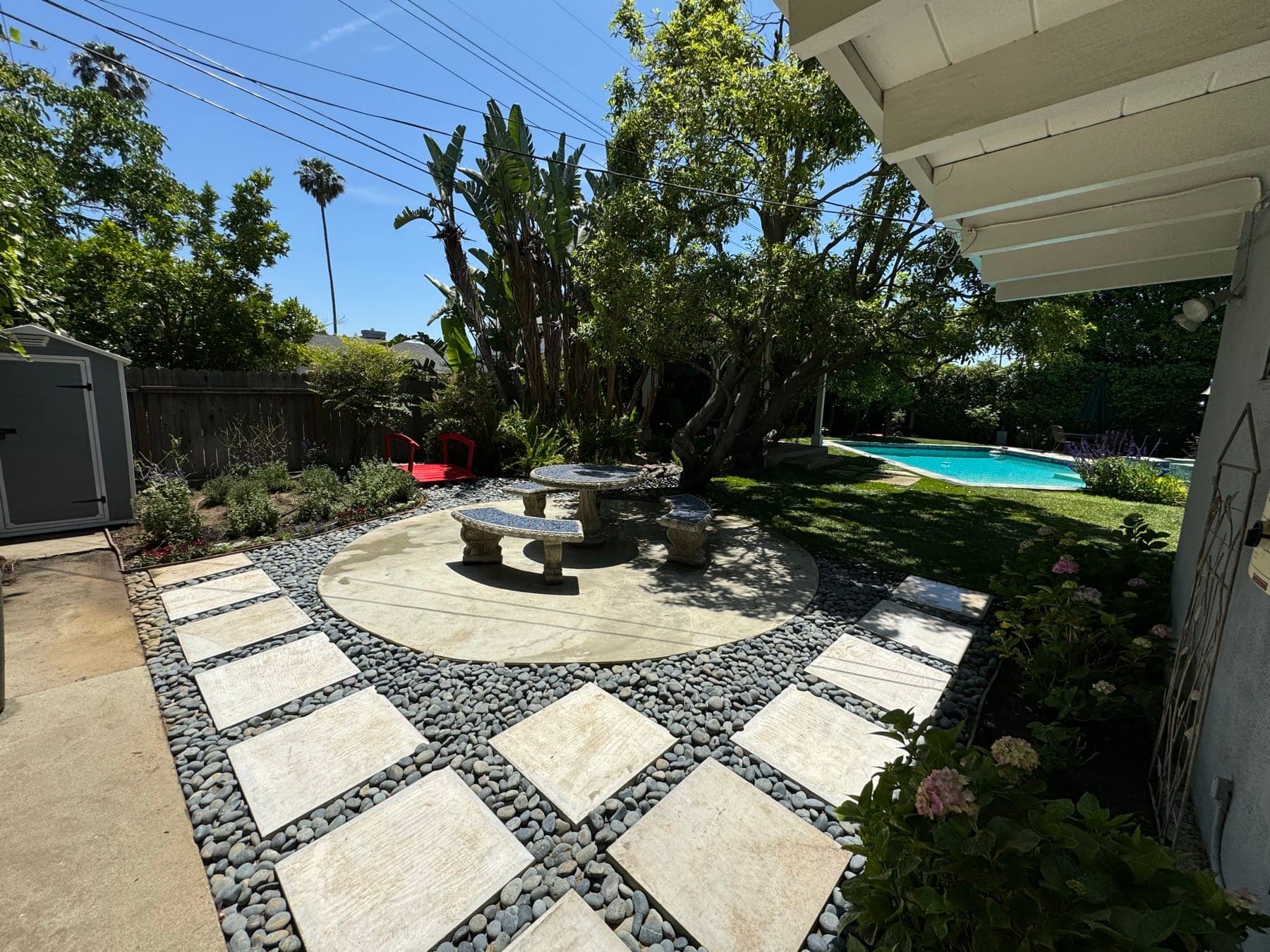
Which Grass Survives a Southern California Summer?
Warm season versus cool season, what each one costs you in water and winter color, and how many hours of sun your yard actually gets before you choose.
· 10 min read
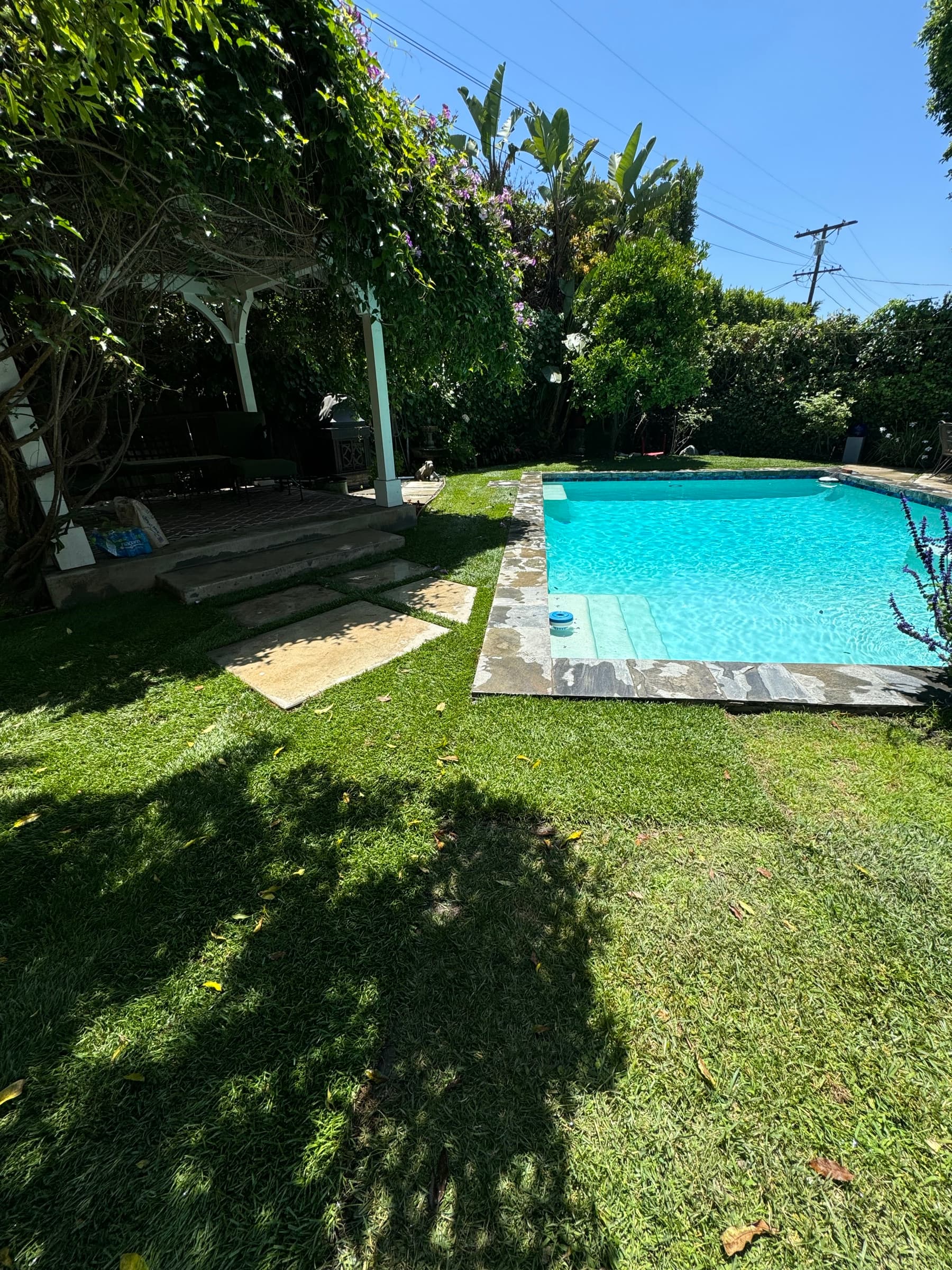
A warm-season grass survives it. A cool-season grass gets through it, on a lot of water, and looks worst exactly when you want the lawn most. That is the whole trade, and everything else is a detail hanging off it.
The harder answer is that the right grass depends on how much direct sun that specific patch of yard gets, what walks on it, and whether you can live with a lawn that goes tan for part of the winter. Some yards do not have a good grass answer at all, and we would rather say so on the walk than sell you the same lawn twice.
Warm season and cool season, and why it decides everything
Grasses split into two groups by when they actually grow.
Warm-season grasses — bermuda, zoysia, St. Augustine, kikuyu, buffalograss — do their growing when soil is warm. They hit their stride in the months that stress everything else, and they use noticeably less water doing it. Their trade is winter: when soil temperatures fall, they slow down and go off-color, and most of them turn some shade of straw for a stretch.
Cool-season grasses — tall fescue, perennial ryegrass, bluegrass — grow in mild weather and stay green all year here. Their peak stress period is our peak heat. They are working hardest to stay alive in July and August, which is when they drink the most, and it is also when they thin out in a full-sun exposure no matter what you do.
Neither is wrong. But if the question is specifically "which one survives a Southern California summer," the honest answer is that warm-season grasses are adapted to it and cool-season grasses are enduring it.
The short list
| Grass | Season | Sun needed | Traffic | Water | Winter color | Watch out for |
|---|---|---|---|---|---|---|
| Hybrid bermuda | Warm | Full sun only | Best recovery of anything | Lowest | Goes straw | Invades beds and joints; wants low, frequent mowing |
| Zoysia | Warm | Sun to light shade | Good, slow to recover | Low to moderate | Goes straw | Slow to establish; builds thatch |
| St. Augustine | Warm | Tolerates real shade | Moderate | Moderate | Off-color, often stays greener | Coarse blade; sensitive to some herbicides |
| Kikuyu | Warm | Full sun | Very tough | Low to moderate | Off-color | Aggressive to the point of being a weed elsewhere |
| Buffalograss and natives | Warm | Full sun | Light only | Lowest | Long dormancy | Not a play lawn |
| Tall fescue | Cool | Sun to part shade | Moderate, does not self-repair | Highest | Stays green | Thins in brutal sun; needs overseeding |
| Perennial ryegrass | Cool | Sun to part shade | Moderate | High | Stays green | Short-lived here on its own |
A few of those rows deserve more than a cell.
Bermuda
If the yard is open, sunny, and gets used hard, hybrid bermuda is difficult to beat. It spreads by runners above and below ground, which means it repairs itself — a worn path or a dog spot fills back in on its own, which is a genuinely different ownership experience from a lawn that has to be reseeded.
Two honest downsides. It spreads into everywhere you did not want it: planting beds, paver joints, the gap under a fence. That is manageable with a real edge and a deep barrier, but it is ongoing work and it never stops. And hybrid bermuda looks its best mowed low and often. Mow it like a fescue lawn and it goes stemmy and open, and you will be disappointed in a grass that is doing exactly what it does.
Zoysia
The one people fall in love with underfoot. It grows dense enough to crowd out most weeds, it takes a fair amount of traffic, and it needs less mowing than bermuda.
The trade is speed in both directions. It establishes slowly, and it recovers slowly from damage — a spot torn up in June is still a spot in August. It also builds thatch, which eventually needs dethatching rather than just mowing. It is a great lawn for people who will not thrash it.
St. Augustine
The shade answer among the warm-season grasses, and worth knowing about for a yard with mature trees or a north-facing back. It still wants a few hours of direct sun — "shade tolerant" is not "shade proof" — but it will hold on where bermuda gives up entirely.
It has a coarse, broad blade that some people love and some people think looks like a different plant, so look at a real lawn before deciding. It does not take heavy repeated traffic well, and it is the least forgiving of the group about certain weed control products.
Kikuyu
The most honest thing to say about kikuyu is that it is extremely tough, very cheap to keep looking green, and a permanent problem for every planting bed within reach. It spreads with real determination. Plenty of Southern California lawns are kikuyu whether or not anybody chose it.
If a yard is already largely kikuyu and it takes hard use, keeping it can be a rational decision. Introducing it deliberately next to beds you care about is one we would talk you out of.
Tall fescue
The default answer when someone says they want a green lawn year-round, and for good reason: it holds color through winter, it has a soft familiar blade, and it establishes fast.
What it does not do is spread. Turf-type tall fescue grows in clumps, so damage does not fill in — a worn path stays a worn path until it is overseeded. And it uses the most water of anything in the table, at the time of year when water costs the most and matters most. A fescue lawn in full west-facing exposure is a permanent negotiation with August.
Dormancy, and the overseeding trap
Warm-season lawns turn tan in winter. Not dead — dormant, with everything below ground alive and waiting. It greens back up when soil warms.
Some people find that completely fine. Some people hate it. It is worth deciding which one you are before choosing the grass, because the standard workaround creates its own problems.
The workaround is overseeding: broadcasting perennial ryegrass into the warm-season lawn in fall so the rye grows through the winter and gives you green while the base grass sleeps. It works. It also means watering and mowing all winter instead of neither, and it sets up a spring transition where the rye is still growing vigorously exactly when the bermuda underneath is trying to wake up. The rye shades it and competes with it, and a lawn that gets overseeded every year without a proper transition tends to come out of spring thinner each time.
Overseeding is a cosmetic choice with a real agronomic cost. That is not an argument against it — it is an argument for knowing what you are signing up for.
The sun audit, which decides more than the variety
Before any of the above matters, go out and count hours of direct sun on the actual patch of ground, at three times of day, in the season you care about. Not "it's a sunny yard." Hours, on that rectangle.
- Six or more hours of direct sun. Everything in the table is available to you. Pick on traffic and water.
- Four to six hours. Warm-season options narrow toward St. Augustine and zoysia; fescue is workable.
- Three to four hours. You are down to a short list, and whatever goes in will be thin. Expect to overseed and to accept less.
- Under about three hours. No grass will be good there. This is the unhelpful thing that is true.
Under a mature tree, add root competition to the shade problem — the tree is winning the contest for both light and water, and it will keep winning. A lawn that is bald in a ring under a canopy is not an irrigation failure. Sometimes the right answer is that the ring becomes a mulched bed or a patio, and the lawn stops at the drip line.
The same logic runs the other way. A narrow strip of grass between a driveway and a stucco wall is getting direct sun plus radiated heat off two hard surfaces, and it is the hottest, driest microclimate on the property. That strip will always be the first to burn, regardless of variety.
Traffic, dogs, and self-repair
The single most useful question about traffic is whether the grass spreads or clumps.
Spreading grasses — bermuda, kikuyu, St. Augustine, zoysia — send out runners and grow back into damage. Clumping grasses — fescue, rye — do not. A fescue lawn with a dog that runs the same line every day develops a permanent path.
Dogs also make urine spots, and here spreading grasses have the same advantage: bermuda will grow through a burned patch on its own within a few weeks; fescue leaves a ring. If dogs are a significant part of how the yard gets used, that alone narrows the list considerably.
Water is not fixed by the variety alone
The choice of grass sets the floor. How the lawn is watered and mowed decides whether you get anywhere near it.
Deep and infrequent beats short and daily, always, for every grass on the list. Short daily cycles keep roots in the top inch of soil, and a lawn with roots in the top inch has no reserve when a heat wave arrives. Longer soakings spaced further apart pull roots down and make the same grass measurably tougher.
Zoning matters more than the controller. Rotors and spray heads apply water at completely different rates, so a single valve serving both guarantees half the lawn is over-watered and half is under-watered no matter what minutes you set. Sun and shade areas on one valve have the same problem for a different reason.
Mowing height changes water use. For most grasses, mowing higher grows deeper roots and shades the soil, and the lawn needs less. Bermuda is the exception that wants a low cut, but even bermuda scalped in July is a bermuda lawn that will need more water than it should.
The option nobody offers
Make the lawn smaller.
A modest panel of the right grass, where people actually sit and play, surrounded by planting and hardscape, gets you almost all of the water saving of tearing the lawn out entirely — while keeping the part of the lawn you use. It also lets you pick a grass for one exposure instead of compromising across a yard that has full sun in one corner and deep shade in the other.
Most of the yards we end up recommending look like that: a real lawn where it earns its place, and something else everywhere it does not.
How each one actually gets installed
The variety you pick also decides how it arrives, and that changes the timeline more than people expect.
Sod is available for most of the common choices and it is what we use in almost every yard. It is a finished lawn the day it goes down, it gives weeds no open ground to colonize, and it does not depend on weeks of perfect surface moisture in a climate that does not offer any.
Seed is cheaper up front and works for common bermuda and for the cool-season grasses, but it needs the top half inch of soil kept damp for weeks, which in practice means many short cycles a day and a lot of attention. Hybrid bermudas do not come true from seed at all — they are installed as sod or sprigged.
Plugs are how zoysia is sometimes started, and they are slow. A plugged zoysia lawn can take a full season or more to close in, with open soil to weed the whole time. It works if you are patient. It disappoints if you were expecting a lawn.
There is also a soil question that sits underneath all three. Our soils tend to run alkaline, which locks up iron for some grasses and shows up as pale, yellowish growth that looks like it needs nitrogen and does not. If a lawn is thin and yellow despite reasonable water and feeding, that is worth checking before adding more of anything.
What to ask before anything is ordered
- Which variety are you proposing, and why that one for this yard? Sun hours, traffic, and water should all be in the answer.
- Warm season or cool season, and what does it look like in January? If the answer is vague about winter color, ask again.
- Does it spread or clump? That decides whether damage repairs itself or needs you.
- How is the soil being prepared? Stripped, ripped, amended, and graded to fall away from the house — the base under a lawn matters as much as the base under a driveway.
- How is the yard zoned, and are sun and shade areas on separate valves?
- What is the mowing height and frequency this grass actually wants? If it needs a reel mower to look right, you want to know now.
- What edging keeps it out of the beds? Especially for bermuda and kikuyu.
- Is there any part of this yard where you would not put a lawn? A straight answer here tells you a lot about who you are hiring.
Real grass on a base that actually drains — stripped, amended, graded, and laid tight so it knits instead of stripping.
Read next
- Artificial Turf vs Sod in Southern CaliforniaWater, heat, upkeep, pets, and what each actually costs to own over ten years — an honest comparison from a crew that installs both.11 min read
- How to Water New SodThe six-week taper from short and frequent to deep and infrequent, the tug test, and the common mistake that kills more new lawns than anything else does.11 min read
- Does Artificial Turf Smell With Dogs?Yes if it is never rinsed, no if the base drains and somebody hoses it down. Base permeability, infill choice, and what the maintenance honestly involves.10 min read